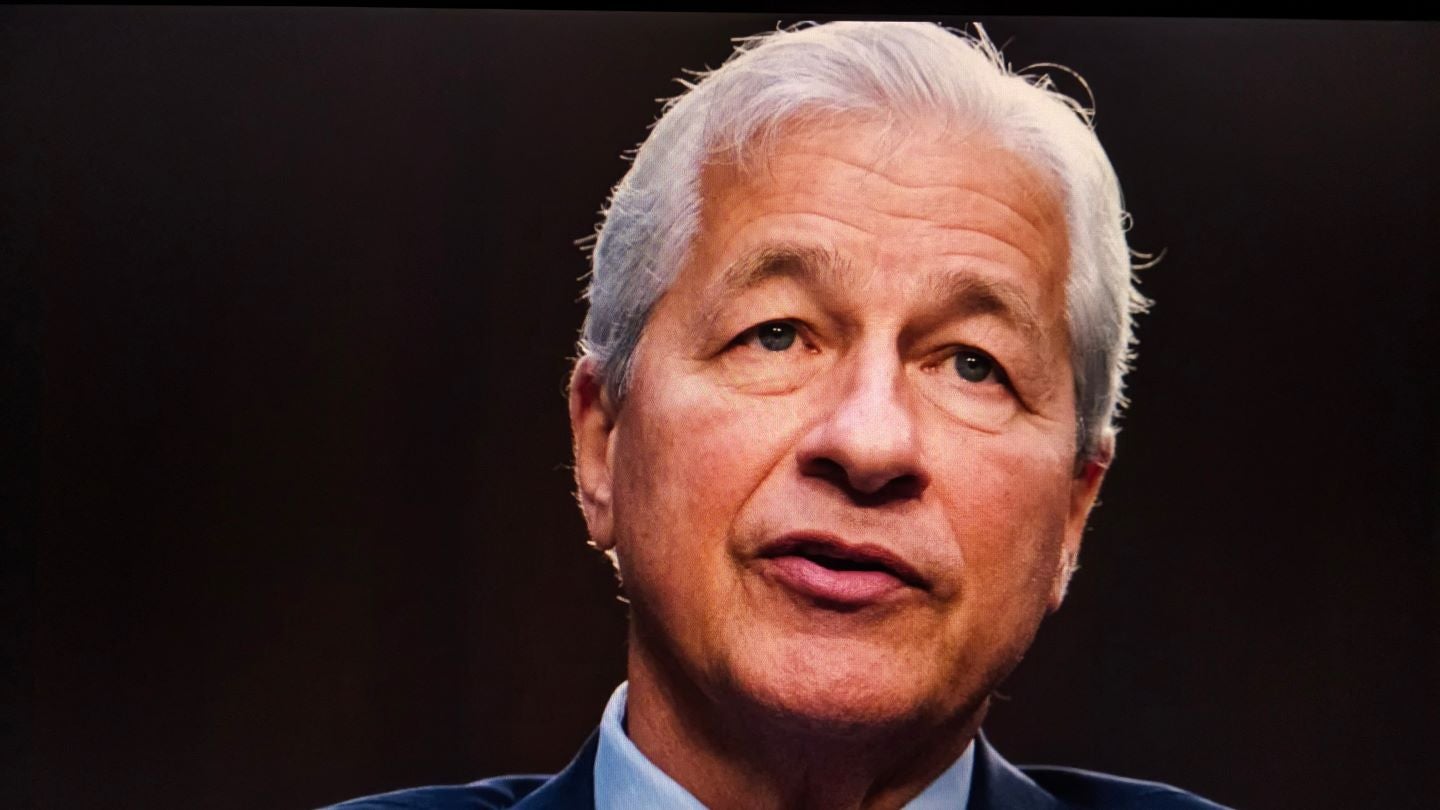
Jamie Dimon has said JPMorgan Chase could use as much as $20bn on an acquisition in the next few years, as the bank weighs how to deploy a large capital surplus.
The chief executive said the lender could have $40bn to $50bn in excess capital above regulatory requirements, helped by a lighter regulatory approach under the Trump administration.

Access deeper industry intelligence
Experience unmatched clarity with a single platform that combines unique data, AI, and human expertise.
Speaking at an industry conference, Dimon said: “I do think there might be, in the next couple years, a chance to put $10 or $20bn to work buying something.”
He added: “And when we do that, we’ll explain to you why we think it’s a great purchase.”
Dimon said the bank was in no hurry to strike a deal.
“Prices are high, including JPMorgan stock”.
“We’re quite patient with capital. It’s not burning a hole in our pocket at all,” he said.
JPMorgan has expanded through acquisitions in the past, including Bear Stearns, Washington Mutual and First Republic.
In recent years, though, the bank has focused more on smaller deals that can be absorbed more easily.
Dimon did not say what kind of company JPMorgan may look to buy.
US law prevents JPMorgan from acquiring another deposit-taking bank because it already controls more than 10% of the country’s deposits.
The bank was allowed to buy First Republic three years ago only after receiving an exemption in a government-run auction following the bank’s failure.
Dimon also gave an upbeat assessment of current business conditions. He said investment banking fees were on track to rise about 10% in the second quarter from a year earlier, while trading was set to increase by at least 11%.
“It’s gung ho, folks,” Dimon said.
“M&A is like the best year we’ve had in I’ve forgotten how many years. [Equity Capital Markets] is going to be huge this year.”
He added that there was “a lot of exuberance out there”.
Dimon also said JPMorgan now expected its 2026 expenses to be about $1bn above earlier guidance. The bank had previously forecast expenses of $105bn.
“We think it’ll be closer to $106bn, mostly driven by better performance, so it’s a good extra $1bn,” Dimon said.