
In assessing the future of investment in the current environment, Sertan Ayçiçek speaks with the authority to be expected of a senior executive with 25 years of international business leadership experience across business, diplomacy, international institutions, academia and strategic investment.
His perspective sits at the intersection of private capital, geopolitics and long-term value creation.
Ayçiçek is currently Chairman of the Board of Royal Funds, CEO of IKAR Holdings and Vice President of the Swiss Academy.

Access deeper industry intelligence
Experience unmatched clarity with a single platform that combines unique data, AI, and human expertise.
In this interview, he explains how geopolitical developments are becoming increasingly relevant to long-term investment decisions. He explains how family offices are approaching private markets and longer investment horizons and discusses the emergence of “strategic capital” and what it means for private investors. In addition, he discusses how AI is changing both investment opportunities and investment decision-making.
PBI: Why has geopolitics become such an important consideration for private bankers and their clients?
Sertan Ayçiçek (SA)
My experience in diplomacy and international institutions taught me that political decisions often become economic realities before they appear in financial statements. A regulatory decision can redirect capital, an export restriction can alter a company’s competitive position, and energy policy can reshape an entire sector.
For private investors, the question is therefore no longer simply whether an asset is attractive today. It is also which forces could determine its value five or ten years from now. Those forces may be financial, technological, regulatory, geopolitical or strategic.
PBI: What does this mean in practical terms for private bankers advising HNW and UHNW clients?
SA:
Financial analysis remains fundamental: cash flows, balance sheets, valuations, management quality and competitive advantage all matter. But these factors increasingly need to be considered within a wider context.
For example, an investment in artificial intelligence may require an understanding of data infrastructure, energy requirements, semiconductor supply chains, regulation and specialised talent. In energy, security of supply, infrastructure and national policy can materially influence long-term economics.
The role of the adviser is not to predict every geopolitical event. It is to help clients understand how structural developments could affect the assets, sectors and businesses they own or are considering.
PBI: How are family offices approaching private markets and longer-term investment horizons?
SA:
Many family offices have the ability to take a genuinely long-term view and are not necessarily constrained by the same time horizon as a traditional fund. That creates an opportunity to look beyond short-term market movements and focus on structural change.
But patient capital still requires discipline. Family offices need to understand management quality, governance, capital structure, liquidity, technology dependencies and geopolitical exposure.
The important distinction is between having patient capital and having a patient investment process. They are not necessarily the same thing.
PBI: You use the term “strategic capital”. What does it mean for private investors?
SA:
Traditionally, capital has largely been evaluated according to the financial return it can generate, and that remains essential. Increasingly, investors are asking another question: “What strategic capability can this capital create?”
We are seeing greater attention towards artificial intelligence, energy infrastructure, semiconductors, critical minerals, cybersecurity and advanced manufacturing. These are not simply investment themes. They can influence economic resilience and strategic capability.
For private capital, this creates a broader framework for assessing opportunities: not only what an asset is worth today, but what ownership or investment can create over the long term.
PBI: Does this change the way private markets should be evaluated?
SA:
Private markets can provide access to businesses and sectors where structural transformation is taking place. But identifying an attractive company is only the beginning.
Investors need to understand management, governance, capital structure, competitive advantage, liquidity and the environment in which the business operates.
For a family office, the question should therefore be not only, “Is this a good investment?” but also, “Does this investment fit our long-term objectives, risk framework and strategic capabilities?”
PBI: How is artificial intelligence changing investment decision-making?
SA:
AI is changing both the companies investors consider and the way investment decisions can be made. At the company level, it is transforming productivity, data analysis, customer interaction and operating models. At the investment level, it can improve the ability to process information, identify patterns and evaluate large amounts of data.
But I do not believe AI eliminates the need for human judgement. In fact, the opposite may be true. As the amount of available information increases, the ability to determine which information actually matters becomes more valuable.
Investment decisions still require judgement, context and an understanding of people.
PBI: Where do you see the most important strategic investment considerations emerging?
SA:
When supply chains are redesigned, new infrastructure is required. When energy systems change, new investment opportunities emerge. When governments prioritise technological sovereignty, capital can move towards new industries and capabilities.
This is why energy, semiconductors, data infrastructure, cybersecurity and advanced manufacturing increasingly need to be considered not only as sectors, but as components of broader economic and strategic systems.
The opportunity often sits at the intersection of several disciplines.
PBI: How important is governance when private capital enters a business?
SA:
It is fundamental. Capital without governance can create acceleration without direction.
When capital enters a business, the objective should not simply be to increase its size. It should help create a stronger organisation. That requires appropriate decision-making structures, accountability, transparency and a clear long-term strategy.
For private investors, governance is therefore increasingly part of the investment thesis rather than simply a compliance issue.
PBI: What qualities do you look for when evaluating a company or management team?
SA:
Intellectual honesty is one of the most important. Management teams need to understand both the opportunity and the risks.
I look for ambition, but ambition needs discipline. I also look closely at governance. A company can have excellent technology or an attractive market and still create significant investment risk if governance is weak.
Ultimately, I want to understand whether management, capital, strategy and governance can reinforce one another.
PBI: How does Switzerland fit into your approach to international capital?
SA:
Switzerland provides an interesting environment because of its combination of international finance, institutions, diplomacy and cross-border business.
For an investment platform with an international outlook, that ecosystem is valuable. But our approach is not built around one country or one market. We are interested in where capital, technology, strategic capability and long-term economic opportunity intersect.
PBI: You have also established the Global Strategic Capital Council. What role do you see it playing?
SA:
Capital can move quickly. Institutions and relationships cannot.
The Global Strategic Capital Council is intended to create a platform for dialogue and cooperation around cross-border investment, strategic capital and international economic transformation.
The global investment environment has become too interconnected for capital to be considered in isolation. Investors, businesses, institutions and strategic partners increasingly need to understand one another. That relationship infrastructure is becoming almost as important as the financial infrastructure itself.
PBI: What should entrepreneurs understand about institutional and private capital?
SA:
Entrepreneurs should think beyond fundraising. The question should not simply be, “Who will invest in my company?” It should be, “What type of capital does my company need at this stage?”
A company may need venture capital at one stage, growth capital at another, strategic corporate investment later, and potentially institutional or infrastructure capital as it matures.
The right capital partner can bring much more than money: expertise, networks, governance, market access and strategic capability.
PBI: What do you expect to define private capital and wealth management over the next decade?
SA:
I believe the distinction between finance and strategy will become increasingly difficult to maintain.
Investors and their advisers will need to understand technology, geopolitics, regulation and human behaviour almost as deeply as they understand markets. AI will transform industries. Energy will become increasingly strategic. Data infrastructure will become critical infrastructure. Robotics will influence productivity, while supply chains will continue to be redesigned around resilience.
You cannot understand the future economy by looking only at today’s financial statements. You need to understand the forces behind those numbers.
PBI: What is the philosophy behind Royal Funds?
SA:
Capital should not simply follow the future. It should help build it.
Our objective is to identify structural changes, understand the forces driving them, and connect the right capital, companies and strategic partners to create long-term value.
The next generation of investment will increasingly be defined not simply by the amount of capital available, but by how effectively investors understand where capital can create long-term strategic value.
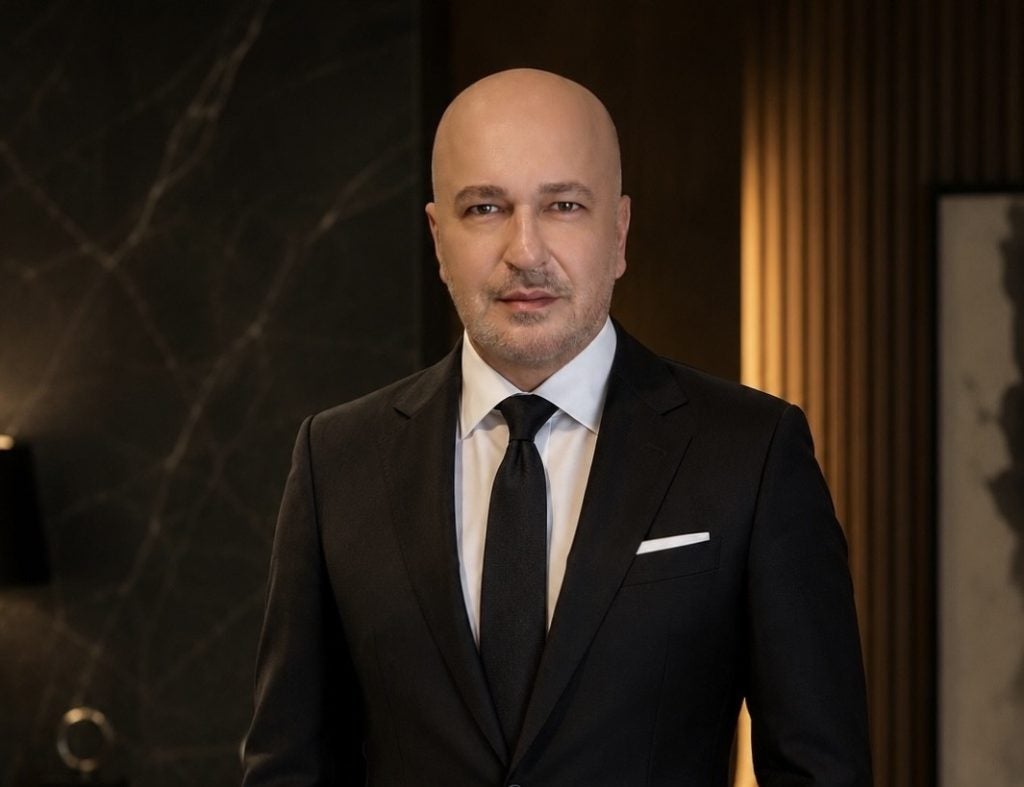
Sertan Ayçiçek, Chairman of the Board of Royal Funds, CEO of IKAR Holdings and Vice President of the Swiss Academy; image credit: Royal Funds