
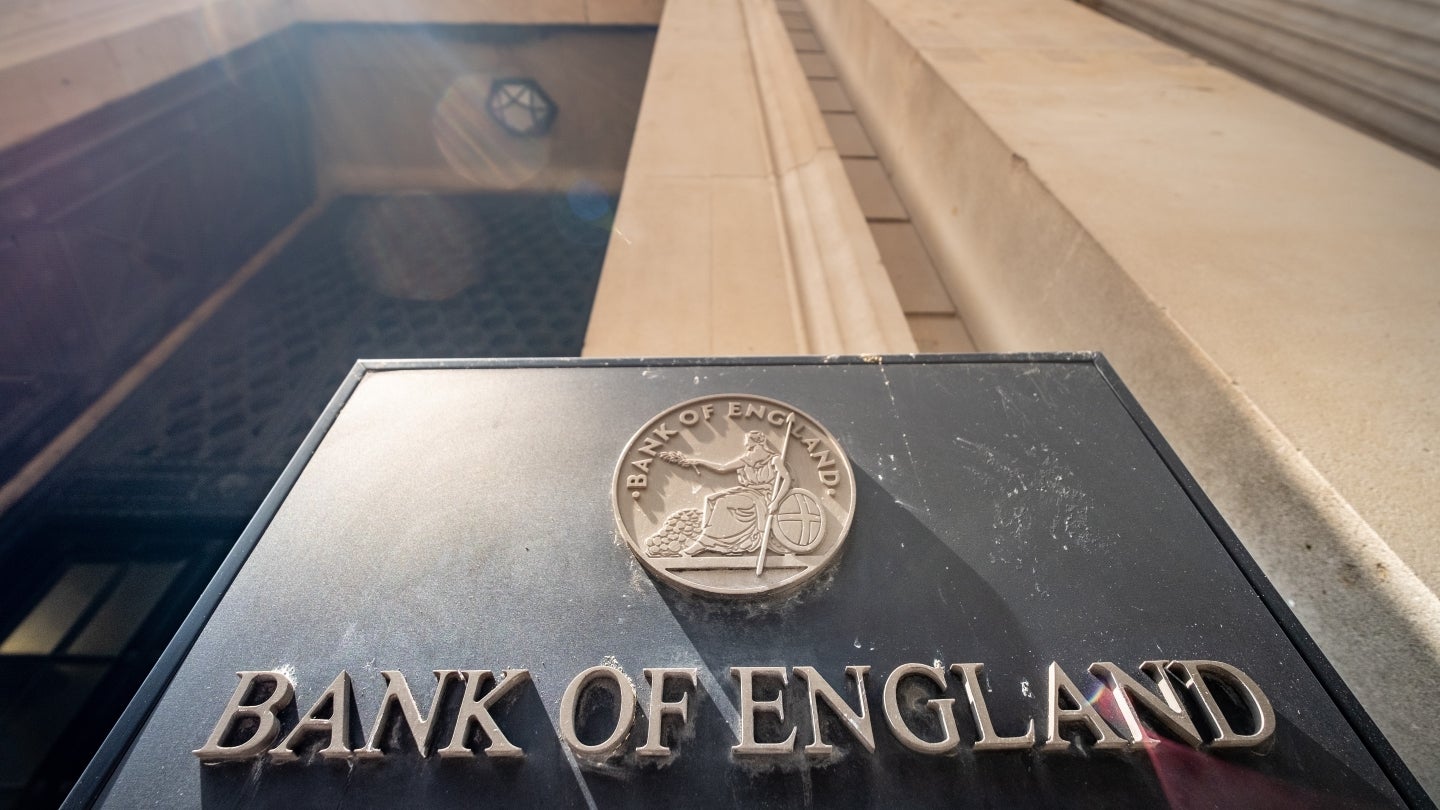
The Bank of England (BoE) plans to loosen a key capital rule for UK lenders, in a move aimed at helping banks maintain lending and support financial markets during periods of stress.
The proposal centres on the leverage ratio, which limits borrowing by requiring banks to hold a minimum level of capital against total assets.

Access deeper industry intelligence
Experience unmatched clarity with a single platform that combines unique data, AI, and human expertise.
The central bank said the change would lower the overall ratio by about 0.2 percentage points of UK banks’ assets.
The Financial Policy Committee (FPC) said the measures were part of a broader adjustment to post-2008 banking rules.
It wants part of the leverage requirement to become “releasable” in a crisis, allowing banks to use capital more easily when conditions worsen.
The BoE also plans to remove an additional leverage buffer that mainly affects larger domestic-focused lenders.
Those include Lloyds Banking Group, NatWest, Nationwide and Santander UK.
In a downturn, an extra capital buffer for those banks would also be cut to zero to help them keep lending.
A consultation on that change will begin later this year.
At the same time, the central bank said it would raise another leverage requirement for more global UK lenders with larger investment banking operations, including HSBC, Barclays and Standard Chartered.
BoE governor Andrew Bailey said the “targeted” changes were intended to address “the anomaly” of UK domestic-focused banks facing higher leverage ratio requirements than many overseas rivals and some UK peers.
The BoE said the package would make it easier for banks to support lending and core markets in a crisis while remaining aligned with international standards.
However, the proposal was not backed without reservations.
The FPC said “some FPC members were concerned that the proposal might lead to an unwanted increase in market-based leverage, with implications for the resilience of core UK markets”.
Bailey said “we have got some more work to do” on the risks linked to high leverage in debt and equity markets.
Separately, the central bank warned that “recent rapid advances in frontier AI capabilities have increased financial stability risks related to cyber and operational resilience”.
It also highlighted other pressures, including high government debt issuance, hedge funds’ heavy borrowing in gilt markets, and growing risks in private credit.
In an update on its first stress test of private credit, the central bank said it had collected information on private equity and private credit investments in 520 UK companies.
Those businesses had debts averaging about six times their earnings.