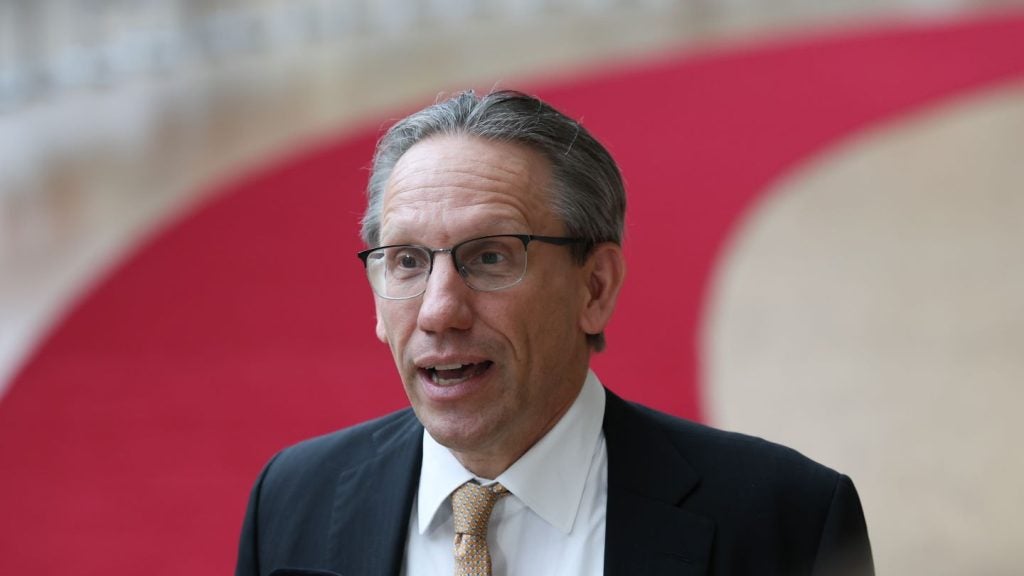
Monetary policy divergence is not the only kind of divergence in the global economy that is contributing to a prolonged global and U.S. economic expansion, according to BNY Mellon Chief Economist Richard Hoey.
Hoey cites global divergences of (1) output gaps, (2) real growth, (3) inflation, (4) real interest rates, (5) real exchange rates, (6) energy sensitivities, (7) stage of the debt cycle, (8) competitiveness, and (9) policy credibility.
Go deeper with GlobalData

Access deeper industry intelligence
Experience unmatched clarity with a single platform that combines unique data, AI, and human expertise.
"Currency markets can be a mechanism for redistributing growth and inflation within the global economy," said Hoey. "Expectations of future monetary policy divergence have been generating favorable trends in currency divergence. We expect a prolonged global and U.S. economic expansion."
"With a reduction in the fiscal drag and the deleveraging drag, combined with the gradual adjustment of the financial system to restrictive financial regulation, some acceleration in the pace of U.S. economic growth is likely," Hoey continued. Hoey continues to expect an eight-year economic expansion in the U.S. He believes that the U.S. economy has just made an upward shift from a half-decade of expansion at a real GDP growth rate slightly above 2% to three years of 3% real GDP growth. Other report highlights include:
Eurozone Faces Below-Target Inflation – While Hoey believes that Eurozone inflation is at its extreme bottom, the Eurozone faces below-target inflation for several years to come, according to the report, given excess capacity and an inefficient monetary transmission mechanism. "The fundamentally poor design of the euro system is hampering the transmission of monetary policy," Hoey says. Reported inflation in the Eurozone is only slightly above zero and core inflation is below 1%.
G4 Central Banks Likely to Split into "Normalizing Central Banks" and "ZIRP Central Banks" – Over the next several years, the G4 central banks are likely to split into (1) the "normalizing central banks" (the Bank of England and the Federal Reserve), where economic expansion appears strong enough that short-term policy rates should begin to rise in 2015 and (2) the "ZIRP central banks" (the European Central Bank and the Bank of Japan), according to Hoey. (ZIRP stands for "zero interest rate policy," which is likely to persist at the ECB and the Bank of Japan for several years, says Hoey.)
No China Meltdown – While Hoey believes that China is undergoing a permanent downward shift to a slower sustained growth rate, he also believes that the Chinese government has both the resources and the willingness to intervene to avoid a financial meltdown.
Large Balance Sheet at U.S. Federal Reserve – New Guidance – In Hoey’s opinion, the final easing action of the Federal Reserve was its modification of balance sheet guidance. Hoey believes that this change in balance sheet guidance contributed to the bond market rally in the first eight months of 2014. "The new guidance is that the Federal Reserve will be slow to reduce its bond portfolio, retaining a large balance sheet for many years rather than quickly reducing its bond portfolio," says Hoey. Hoey also expects that a slow pace of tightening should cause Federal Reserve policy to eventually fall "behind the curve" over the next several years, resulting in an interest rate spike in 2017 or 2018.