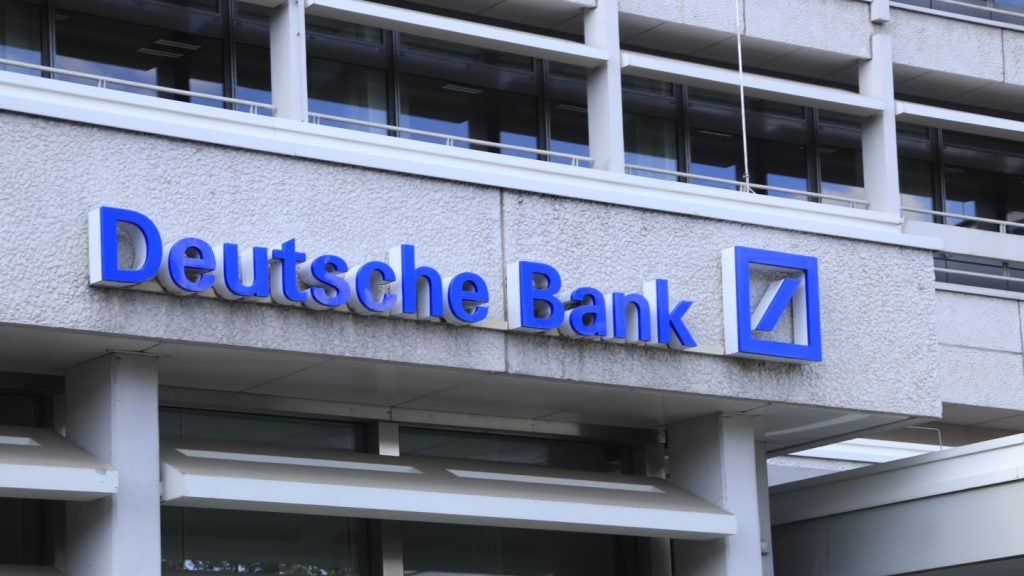
Swiss firm Deutsche Bank (Suisse) has reached resolution with the US Department of Justice (DoJ) over the tax evasion cases under the department’s Swiss bank programme.
The bank has agreed to pay a penalty of more than $31m to the US to avoid prosecution over allegations that it helped US citizens avoid paying taxes.
Go deeper with GlobalData


Access deeper industry intelligence
Experience unmatched clarity with a single platform that combines unique data, AI, and human expertise.
Under the terms of the non-prosecution deal, Deutsche Bank Suisse has agreed to cooperate in any related criminal or civil proceedings and demonstrate its implementation of controls to prevent misconduct involving undeclared US accounts and pay penalties.
The US DoJ in a statement said that Swiss unit offered a number of services and permitted some practices that helped US taxpayers in hiding assets and income from the Internal Revenue Service (IRS).
The bank held a total of 1072 US related accounts with approximately $7.65bn in assets under management since 1 August 2008.
Deutsche Bank Suisse was involved in practices such as hold mail services, and notes written by Deutsche Bank Suisse employees on some hold mail forms
The Justice Department added that the unit offered US beneficial owners with debit cards linked to accounts held at Deutsche Bank Suisse or credit cards whose balances the US beneficial owners instructed Deutsche Bank Suisse to pay from accounts held at the bank.
The unit also processed standing orders for checks in amounts less than $10,000 to be sent on a monthly basis into the US and also maintained and serviced accounts beneficially owned by US taxpayers that were held by entities created in countries such as Liechtenstein, Liberia, Panama and the British Virgin Islands.
Deutsche Bank Suisse has entered into a qualified intermediary (QI) agreement with the IRS in 2001 that required the bank to get account holders’ permission to disclose their identities to the agency.