
International retail banks are seeing sustained demand from investor clients for global equity exposure. Whether through advisory mandates, discretionary portfolios or execution-only platforms, overseas equities remain central to modern wealth allocation. However, as cross-border investing becomes more mainstream, private banking teams are increasingly aware that the realised client outcome depends on far more than market selection alone.
Today’s investors – particularly high-net-worth individuals, family offices and internationally mobile clients – are asking more detailed questions about net returns, tax efficiency and operational robustness. At the same time, regulators across major jurisdictions continue to sharpen expectations around valuation governance, custody oversight and investor protection. The implication for retail banks is clear: the difference between headline performance and delivered client returns is often determined in the post-trade infrastructure.
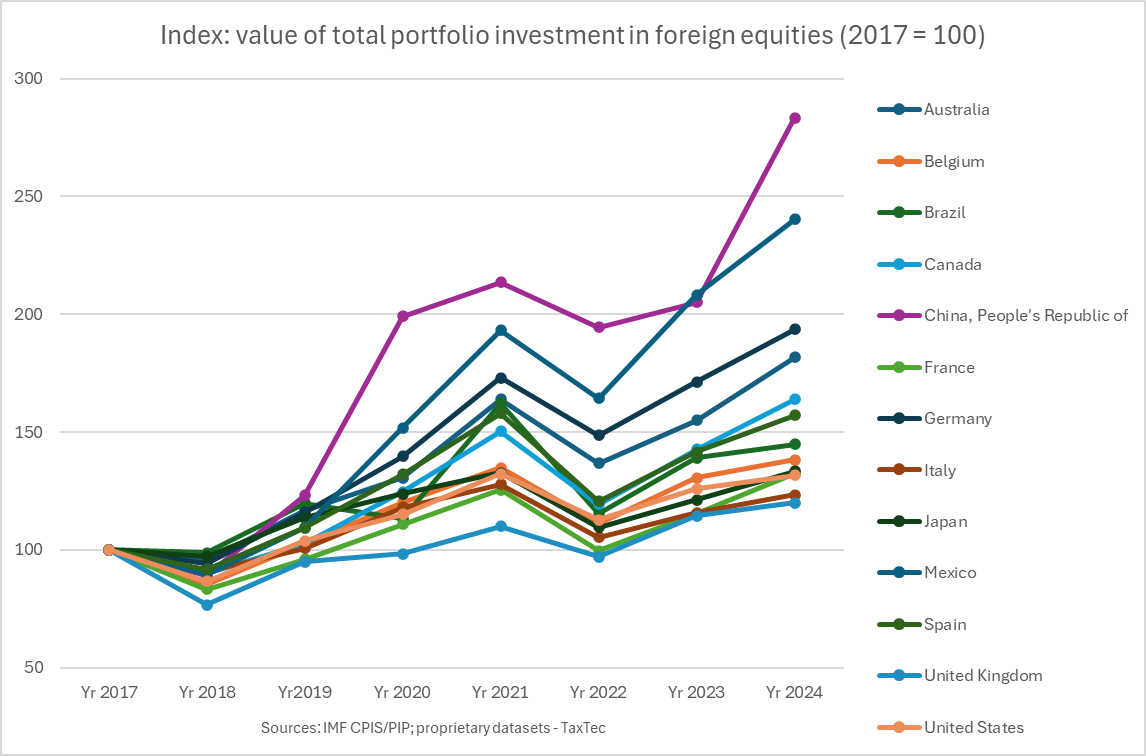
Despite these complexities, international equity allocations continue to expand. Retail banks across Europe, Asia and the Middle East are broadening client access to foreign markets via funds, ETFs and cross-border custody platforms. Benchmark globalisation and the growth of digital wealth channels have accelerated this trend, increasing the proportion of client assets invested outside domestic markets.
Go deeper with GlobalData


Access deeper industry intelligence
Experience unmatched clarity with a single platform that combines unique data, AI, and human expertise.
For international retail banks, the key challenge is to ensure that the operational ecosystem supporting these investments is as robust as the investment proposition itself.
Core market risks remain in focus
While operational considerations are rising in prominence, traditional market risks still sit at the heart of portfolio suitability and client advice.
FX risk and hedge discipline
For internationally diversified clients, foreign exchange volatility remains the most immediate and visible risk. However, from a private banking perspective, the critical question is not simply whether hedging is available but how effectively it is implemented and monitored.
Currency overlay programmes introduce operational complexity: collateral management, forward roll scheduling, counterparty exposure limits and time-zone settlement cut-offs all require tight control. Drift can occur through stale exposure data, incorrect hedge ratios or delayed execution – particularly in portfolios containing ETFs, depositary receipts or cross-listed securities.
Retail banks conducting manager or platform due diligence increasingly look for clear hedge governance, independent exposure monitoring and disciplined roll management to ensure currency risk is being managed as intended.
Tariff and export friction sensitivity
Recent tariff developments and export control measures have reinforced how quickly geopolitical developments can reprice global equity sectors. Industrials, autos, semiconductors and luxury goods remain particularly sensitive to policy shifts.
Beyond market volatility, private banks must also consider operational market-access risk. Cross-border disruptions can manifest through settlement delays, higher fail rates, capital controls or corporate action uncertainty. Investment platforms with credible contingency planning for blocked securities or “cannot deliver” scenarios are therefore better positioned to protect client portfolios.
Financial reporting and data integrity
Global equity investing inevitably spans multiple accounting regimes and disclosure standards. For retail banks, the primary concern is the integrity of the data supply chain feeding client reporting and portfolio valuation.
Operational breakdowns typically appear as incorrect income accruals, entitlement errors or NAV discrepancies. Accordingly, platform due diligence increasingly focuses on data sourcing, validation workflows, exception management and vendor oversight.
Structuring the portfolio
Risk of concentration
Major global benchmarks have become increasingly concentrated in a relatively small group of mega-cap issuers and growth sectors. For retail banks constructing model portfolios or advising clients, geographic diversification alone is no longer sufficient.
Look-through analysis at sector, factor and issuer level is essential to ensure that “global” exposure does not unintentionally concentrate risk in a narrow part of the market.
Income expectations and liquidity timing
Many investor clients access overseas equities for income diversification. However, private banks should model expected yield on a net-of-withholding-tax basis and incorporate reclaim timing into client cash-flow planning.
Delayed tax recoveries can create both financing drag and FX timing effects, which may lead to client confusion if headline yields are compared with actual income received.
Operational value dilution: increasingly material
A growing focus for international retail banks is the extent to which avoidable value erosion occurs within the operational chain. Cross-border equity investing is effectively a multi-stage process spanning execution, settlement, custody, tax processing and valuation. Weakness at any stage can affect client outcomes.
Two areas in particular – withholding tax and corporate actions – now warrant close attention.
Withholding tax: from back office to client outcome
Let’s take a closer look at withholding tax. Dividend withholding tax has evolved into a meaningful determinant of net client returns. Reclaim processes remain administratively complex across many jurisdictions and, where not optimised, can reduce investors’ rightful income.
Foreign equities inherently create a tax “wedge” between gross and net performance. Unless treaty relief is secured via relief-at-source or post-payment reclaim, dividends are typically received at statutory rates, creating persistent drag – especially in income-focused portfolios.
The practical challenge lies in the fragmentation of global reclaim regimes. Documentation requirements, limitation periods, beneficial ownership tests and local market practices all influence recovery success. Retail banks are therefore increasingly assessing:
- breadth of reclaim coverage by market
- realised recovery rates versus treaty entitlements
- ageing profiles of outstanding claims
- clarity of responsibility across custodians and specialist agents
|
Policy initiatives such as the EU’s FASTER Directive aim to streamline procedures through standardisation and enhanced information sharing, although full implementation remains several years away. In the interim, withholding tax efficiency is becoming a core component of platform due diligence.
Corporate actions: ongoing operational exposure
Corporate actions remain one of the most error-prone areas of cross-border securities administration. Market-specific practices, tight election deadlines and fragmented data flows create persistent risk.
Although ISO 20022 has improved messaging standardisation, retail banks increasingly expect automated multi-source capture, robust election workflows, exception-based monitoring and post-event entitlement reconciliation. Many client-impact events still originate in this process layer rather than in market performance.
Valuation governance and depositary oversight
Regulators globally continue to emphasise strong valuation controls, particularly for UCITS and AIF structures widely used in cross-border distribution.
Multi-market portfolios heighten stale-pricing risk due to time-zone differences, liquidity gaps and local holiday effects. Retail banks should expect independent price sourcing, formal challenge procedures, defined tolerance thresholds and volatility-driven fair-value adjustments.
The depositary function also remains a key safeguard. Effective cash monitoring can identify misdirected dividends, unexpected tax debits, settlement breaks, FX posting errors and missed corporate action proceeds before they affect client reporting. For international retail banks, depositary robustness is an important component of platform risk management.
Maximising returns in a new world
The strategic case for global equity exposure remains strong for retail banking clients. International markets continue to offer diversification, access to world-leading companies and attractive income opportunities.
However, the margin between headline and realised performance is increasingly determined by operational quality. Currency management, tax recovery efficiency, corporate action discipline and valuation governance now sit firmly within the retail bank’s control framework.
For institutions that rigorously examine these layers – particularly withholding tax processes – the reward is greater confidence that client portfolios will deliver as expected. In an environment of rising client scrutiny and tightening margins, that operational precision is becoming a meaningful driver of consistent income delivery and long-term investment outcomes.

Stephen Everard is CEO of withholding tax reclamation experts TaxTec