
Clients heading into 2026 don’t know what they don’t know about money. Even the most accomplished of people, who have accumulated significant wealth, are battling against a constant noise of financial misunderstanding: they’re surrounded by awful advice on social media, and they don’t know which financial advisers they can actually trust. They’re trying to navigate all of that while governments shift the goalposts, with tax changes that create urgent deadlines.
Advisers who can provide clarity in that chaos are worth their weight in gold. As we head into the new year, here are the trends we expect our clients need addressing.
The trust problem
For clients looking for financial advice in 2026, the hardest question isn’t “what should I do?” – it’s “who can I actually trust?”
Only a third of high-net-worth individuals say they’re completely satisfied with the advice they receive. That means two out of three people paying for professional help aren’t getting what they need.
Go deeper with GlobalData


Access deeper industry intelligence
Experience unmatched clarity with a single platform that combines unique data, AI, and human expertise.
The question clients should be asking their adviser: are your incentives aligned with mine? Do you get paid more if I do what’s best for you, or what’s best for me? Are you personally accountable for the advice you give, or are you following a corporate playbook?
These aren’t comfortable questions. But they’re essential ones.
What we’re seeing is people gravitating towards advisers whose values and incentives are completely transparent. Where the relationship is built around curiosity and genuine understanding, not product sales or asset gathering. Where they feel seen, heard, and supported – not managed.
We recently won a client in a very competitive process, and the feedback was simple: “You asked questions the others didn’t.” That’s what proper planning looks like. Understanding what matters most to the client, not what’s easiest to sell.
The AI capacity divide
We’re about 12 to 18 months away from AI actually being useful in financial planning. I know – we’ve heard that before. But this time feels different.
What matters isn’t the technology itself – it’s what it means for clients. When AI handles the administrative work, it frees up time for the conversations that actually matter: coaching clients through difficult decisions, challenging them when they’re about to do something daft, pushing them to take action when they’re procrastinating.
Clients don’t need another algorithm telling them what to do. They need someone who gets the grey areas, who understands their specific situation, and who’s personally accountable when things go wrong. That’s not going anywhere. But if technology can remove the barriers to that kind of relationship – the paperwork, the admin, the repetitive tasks – that’s a win for everyone.
We’ve got 80-year-old clients using mobile apps. It’s not about the technology – it’s about getting more time with the people who actually matter.
The financial literacy gap
Financial literacy still isn’t taught in schools. Young people learn about oxbow lakes and the Tudors, but not about how tax works or what a pension actually does. Then they hit working age and they’re surrounded by “finfluencers” on TikTok telling them to put everything in crypto or to invest in an up-and-coming company.
We see the consequences. People opting out of pension auto-enrolment because they don’t understand it. High earners who think they’re paying 45% tax on their entire salary. It’s not their fault – they’ve never been taught.
In 2026, I think this finally becomes a proper policy issue. The gap between what people need to know and what they’re taught is untenable.
We built Thrive Money to help bridge the gap to accessible financial education with no sales pitch attached. Just the fundamentals. Because if you get the foundation right, everything else follows.
The fiscal uncertainty cycle
Governments globally are wrestling with ongoing fiscal uncertainty. In the UK, the 2025 Budget may have given the Chancellor a little more fiscal headroom, but the underlying problem hasn’t changed. As a country, we’ve drifted into a permanent cycle of fiscal resets – a Budget, followed by new assumptions from the OBR, followed by another round of speculation, and before long we’re talking about yet another Budget.
What worries me most is that confidence is taking more damage than any of the individual policy changes. Younger clients – people in their 30s, 40s and 50s – increasingly feel pensions are unpredictable. The rules around tax relief, allowances, lifetime limits, even salary sacrifice… every Budget seems to put something new on the table. And people are asking a perfectly rational question: “Why should I lock money away for 30 years if the government keeps rewriting the terms?”
But despite the noise, pensions remain the most tax-efficient long-term planning tool we have. The structure still works. What doesn’t work is trying to second-guess every possible change.
As a business owner, I know the first rule: focus on what you can control. My advice is simple: build a plan that’s flexible enough to adapt. Whatever your government decides to do next – and no matter what country you’re in, there’s always changes – disciplined planning will always beat speculation.
The legacy planning surge
Policy changes are upending how people plan for their families. In the UK, pensions are entering the inheritance tax net in April 2027. That single policy change means families with £2-3m estates – not ultra-wealthy territory, just successful business owners and professionals – now face IHT bills of £600,000 to £1m.
What we’re seeing is people coming to us much earlier in life. The average age in our industry for estate planning is 60-plus. Our average client is mid-40s. Start early and you’ve got options. Start late and you’re scrambling.
Too many advisers sell single products – business relief here, an insurance policy there. Advisors need to take a holistic view. There are eight different solutions clients can use, and most people need a combination. It’s about building a plan that actually works for their family, not just ticking a box for one tax year.
The business owner death contingency gap
Most SMEs have never actually modelled what would happen if a key shareholder died under the new rules. For many families, the potential inheritance tax exposure could be significant, and the business simply wouldn’t have the liquidity to deal with it.
This isn’t about frightening people – it’s about being realistic. If you run a business, you have to ask yourself: what happens to the company, to my co-shareholders, and to my family if something happens to me after 2026? Too many people assume they have time. But contingency planning needs to happen while everyone is alive and able to make decisions.
Accountants play a crucial role here. They’re often the first to highlight valuations, growth patterns and structural considerations. When we work together, we can build a joined-up plan that actually protects the business.
Sometimes the answer is restructuring. Sometimes it’s bringing forward succession. And in many cases, the simplest first step is taking out a 10-year life policy to create the liquidity needed to buy breathing space. The message is simple: don’t risk it.
What it all means
If you’re a business owner, a professional, or someone with accumulated wealth heading into 2026, these aren’t abstract trends – they’re urgent, practical pressures that demand attention.
The good news? Proper planning still works. Despite the noise, despite the uncertainty, despite the trust problem – disciplined, transparent, human-centred financial planning remains the best way to navigate complexity.
The question is whether clients are working with someone who genuinely has their interests at heart.
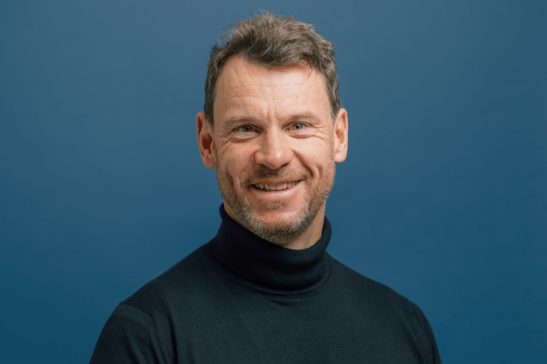
Anthony Villis is Managing Director of First Wealth, a Certified B Corporation and chartered financial planning firm.