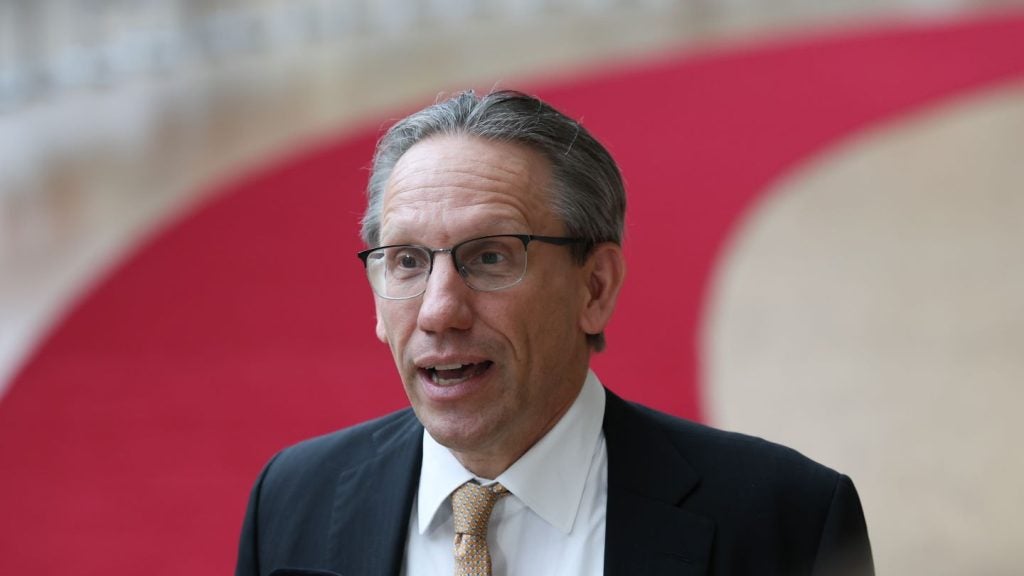
Chief executive of Liechtenstein’s biggest bank, LGT, Prince Max von und zu Liechtenstein, has said, in an interview with Reuters, that he expects Liechtenstein and Swiss banks to flourish if disputes over untaxed assets are settled fast.
Prince Max, who runs the royal-family-owned bank, is not worried by an international push to fight tax evasion.
Go deeper with GlobalData


Access deeper industry intelligence
Experience unmatched clarity with a single platform that combines unique data, AI, and human expertise.
Prince Max told Reuters, "People are focusing on the threats but there are more chances than threats."
LGT was one of the first major banks to be caught up in an international clamp down on tax evasion since the financial crisis. Having strongly expanded overseas, LGT had suffered a client exodus in 2008 and 2009 after it featured in a US Senate report on tax evasion.
In February 2013, LGT expanded its footprint and opened a new office in Dubai, that will offer set of advisory and execution services | to private banking clients across the GCC, East Mediterranean, Turkey, Africa and South Asia. However , LGT is not targeting more acquisitions after it bought the Swiss business of Dresdner Bank in 2009, said Prince Max.
The LGT CEO also said it was "striking" how fast opinions on tax evasion had shifted since 2008, when stolen data revealed hundreds of Germans had hidden assets in the principality.
Data share push
According to Prince Max, the Swiss tax deal with Germany falling through as well as US investigations into Swiss banks could "scare clients again in the short term".
In May, Liechtenstein’s prime minister said the country was prepared to discuss an automatic exchange of client data with the European Union after Austria and Luxembourg agreed to drop bank secrecy.
As PBI reported, the British prime minister David Cameron had written to the leaders of Britain’s offshore tax havens in May calling for tax transparency and had invited them to London before the upcoming G8 summit in Northern Ireland to finalise it. However, the premier of Bermuda, Craig Cannonier, said on 12 June that Britain’s overseas territories will not sign up to an international convention ahead of the summit.
Switzerland in focus
The Swiss government and banks especially have been under pressure within the EU as well as from authorities in the US to allow bank data sharing to crackdown on tax evaders.
On 29 May, the Swiss government agreed to create a legal basis that will enable its banks to settle investigations by US authorities into their role in assisting wealthy Americans in evading taxes. Even though the proposed bill was rejected by a Swiss parliamentary committee, the upper house of Switzerland’s parliament has given the bill its consent.
In early June, Andorra agreed to introduce a tax on personal income for the first time, effectively putting an end to its status as a tax haven as it faces pressure from the its European neighbors to tackle tax evasion.