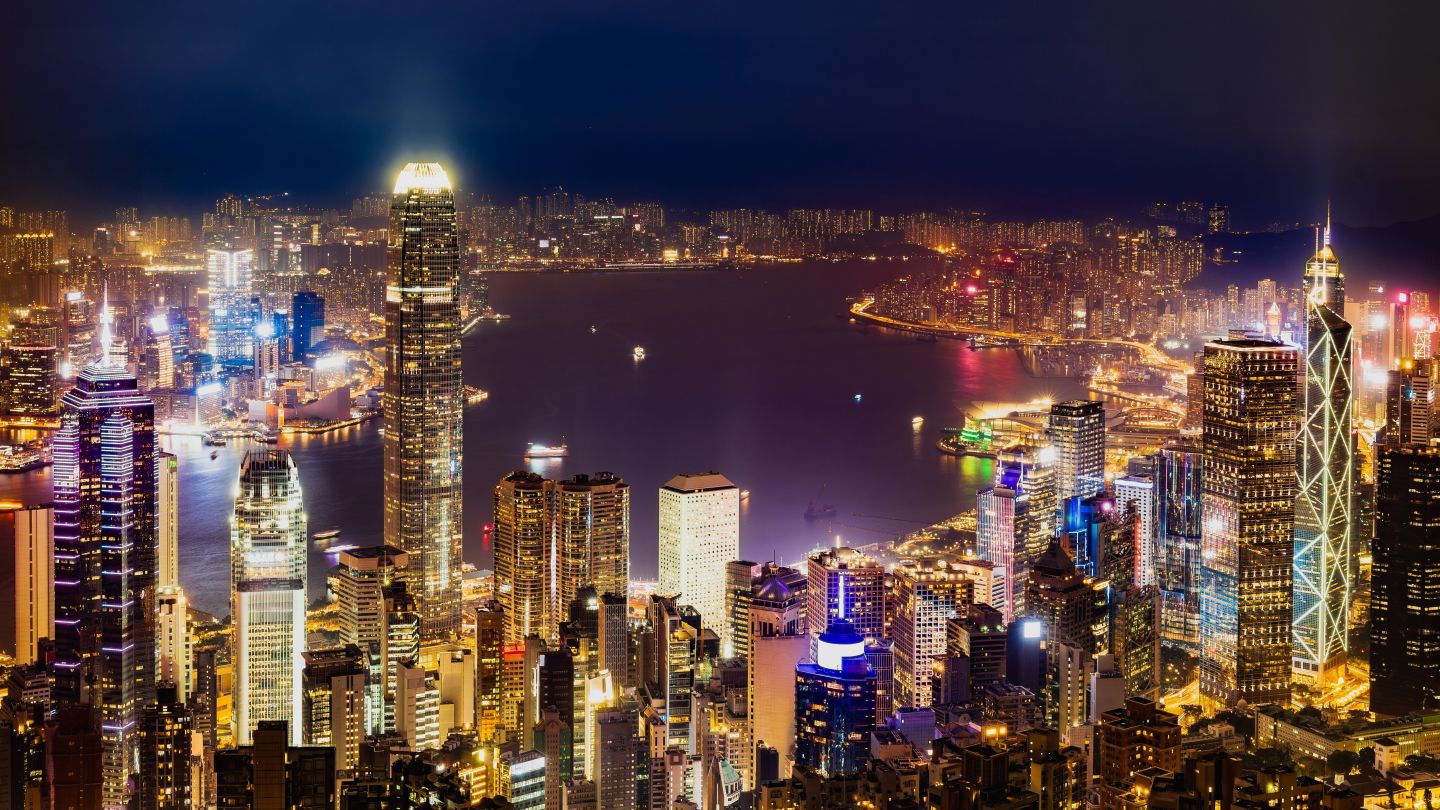
Hong Kong became the world’s largest cross-border wealth hub in 2025, surpassing Switzerland for the first time, according to Boston Consulting Group (BCG).
In its Global Wealth Report 2026: The Great Reordering, BCG said cross-border wealth booked in Hong Kong rose 10.7% last year to $2.9 trillion. The increase was driven by inflows from mainland China, strong IPO activity and gains in equity markets.
Go deeper with GlobalData


Access deeper industry intelligence
Experience unmatched clarity with a single platform that combines unique data, AI, and human expertise.
The report said global financial wealth also grew 10.7% in 2025, reaching $333 trillion, despite trade tensions, tariff disputes and geopolitical instability.
Including real assets, total global net wealth climbed to nearly $550 trillion.
Cross-border wealth worldwide increased 8.4% to $15.7 trillion. The top ten booking centres accounted for almost 90% of new offshore flows.
Michael Kahlich, a BCG managing director and partner and coauthor of the report, said: “We are seeing wealth creation, cross-border capital flows, and investment ecosystems increasingly concentrate into a smaller number of globally connected hubs. Hong Kong’s rise reflects the growing gravitational pull of Asian wealth and capital markets.”
BCG said offshore wealth is increasingly clustering around two main hub networks.
One is centred on Hong Kong and Singapore, serving capital from mainland China, India and Southeast Asia.
The other is anchored by Switzerland, the US and the UK, catering to wealth from Europe, the Middle East and Latin America.
Singapore continued to strengthen its role as Asia’s most diversified offshore wealth centre, helped by safe-haven inflows and the ongoing expansion of its wealth management ecosystem.
The UAE remained among the fastest-growing booking centres globally, with cross-border wealth rising 11.1% in 2025.
The report also highlighted uneven wealth growth across regions.
Western Europe recorded the strongest growth among major markets at 15.3%, supported by favourable currency movements and high household savings rates.
Mainland China’s financial wealth rose 15% in 2025 and is projected to grow 9% annually through 2030.
North American wealth growth slowed to 7.4%, with gains concentrated among a narrow group of large technology companies.
BCG expects emerging markets to contribute about 10% of global wealth growth through 2030.
Those markets are forecast to add nearly $7 trillion in financial wealth by 2030, led by India, Brazil and Mexico.
The affluent-and-above segment — people with more than $250,000 in financial wealth — is expected to grow 8% a year across these markets.
That would create more than one million new millionaires by the end of the decade.
BCG said this client group remains structurally underserved.
It said many international wealth managers are retreating towards ultra-high-net-worth clients because of rising compliance costs and stricter cross-border requirements.
That shift could leave room for local banks and independent wealth managers to expand.
The report also pointed to the start of Asia’s first large-scale intergenerational wealth transfer.
Across Singapore, Malaysia and Indonesia, between 40% and 50% of major enterprises are still founder-led, with median leadership ages above 70.
BCG also said AI is beginning to reshape the economics and operating models of wealth management.
AI-based tools are already being used to draft financial plans, automate compliance documents, generate portfolio rationales and predict client churn.
According to BCG, AI-first wealth managers could unlock 25% to 30% capacity gains across key workflows while increasing revenue per adviser by 15% to 20%.