
The traditional relationship between asset classes has long been challenged but is now being further disrupted by geopolitics, inflationary pressures, and concentrated market leadership.
GlobalData Wealth Management Industry Conditions Analytics
GlobalData’s Wealth Management Industry Conditions Analytics shows that geopolitical events now rank as a more important driver of asset allocation decisions than purely economic factors. This means portfolio decisions are increasingly shaped by security risk, sanctions, energy supply disruptions, and global fragmentation rather than just GDP growth and rate cycles.
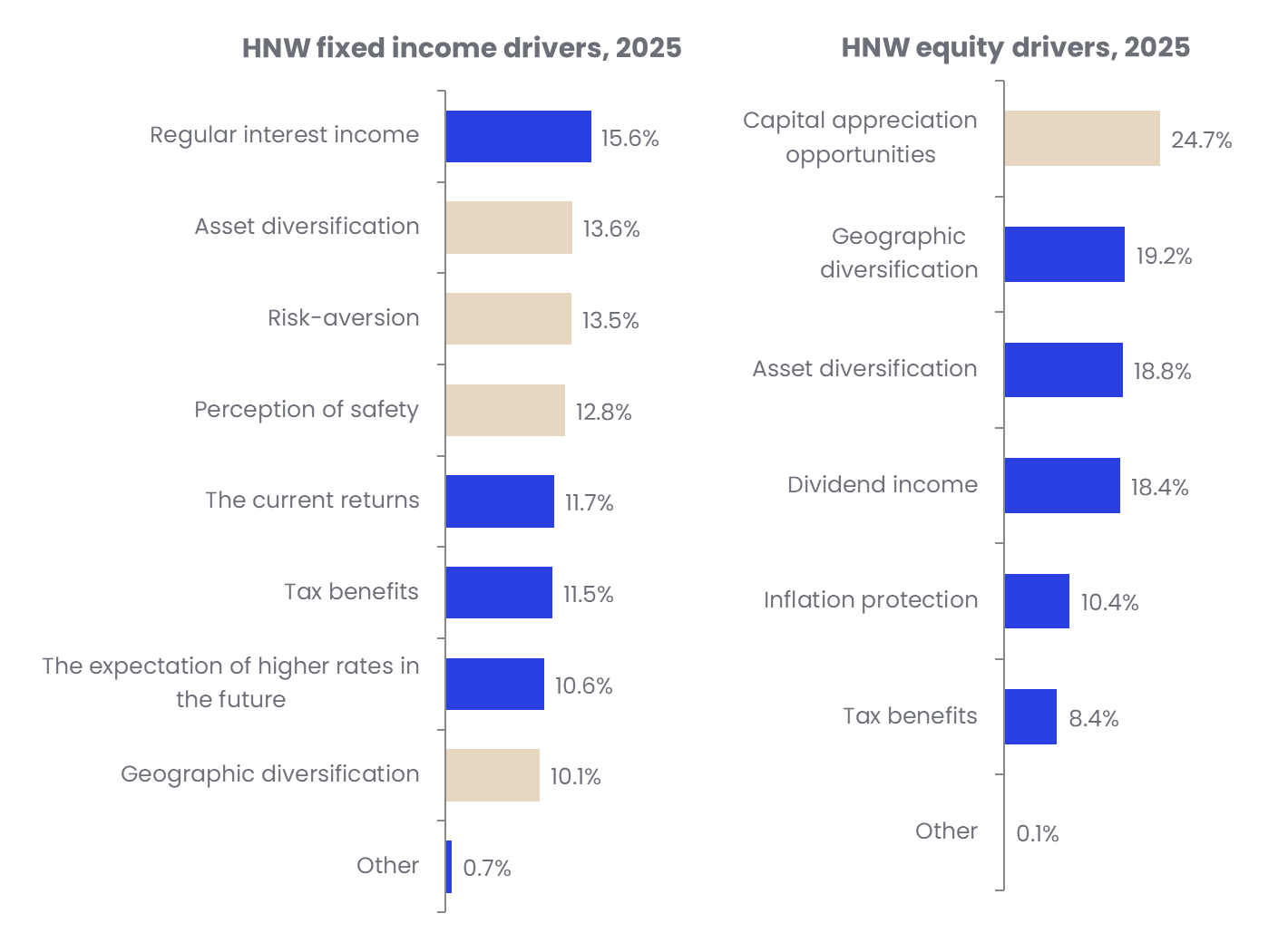
Traditionally, fixed income would provide the first line of defence. Together, diversification benefits and risk consideration drive half of HNW investors’ fixed-income investments. However, the current escalation in the Middle East has left investors stranded. Rising oil prices are reviving inflationary pressures, which in turn are pushing bond yields higher. Instead of acting as a safe haven, large parts of the fixed-income market have experienced selling pressure.
With the exception of short-duration products—which remain attractive due to their lower sensitivity to interest rate movements—the likelihood of sustained higher rates is prompting investors to reduce exposure to longer-dated bonds.
In the equities space, the challenge is equally complex. GlobalData findings show that capital appreciation opportunities remain the primary driver of HNW equity allocations. Yet broad market returns have become increasingly concentrated in large-cap technology stocks. While these companies have delivered strong performance, investors are increasingly wary of elevated valuations and concentration risk. As a result, we are likely to see greater interest in sectors more directly linked to the current geopolitical environment, such as energy and defence. The initial market reaction to the escalation also illustrated the growing challenge for diversification, with both equities and bonds selling off simultaneously as inflation concerns pushed investors away from longer-duration assets.
GlobalData HNW Asset Allocation Analytics
The clear winners are precious metals. Gold, in particular, is benefiting from renewed safe-haven demand as investors seek assets that can protect purchasing power during periods of inflation and geopolitical uncertainty.
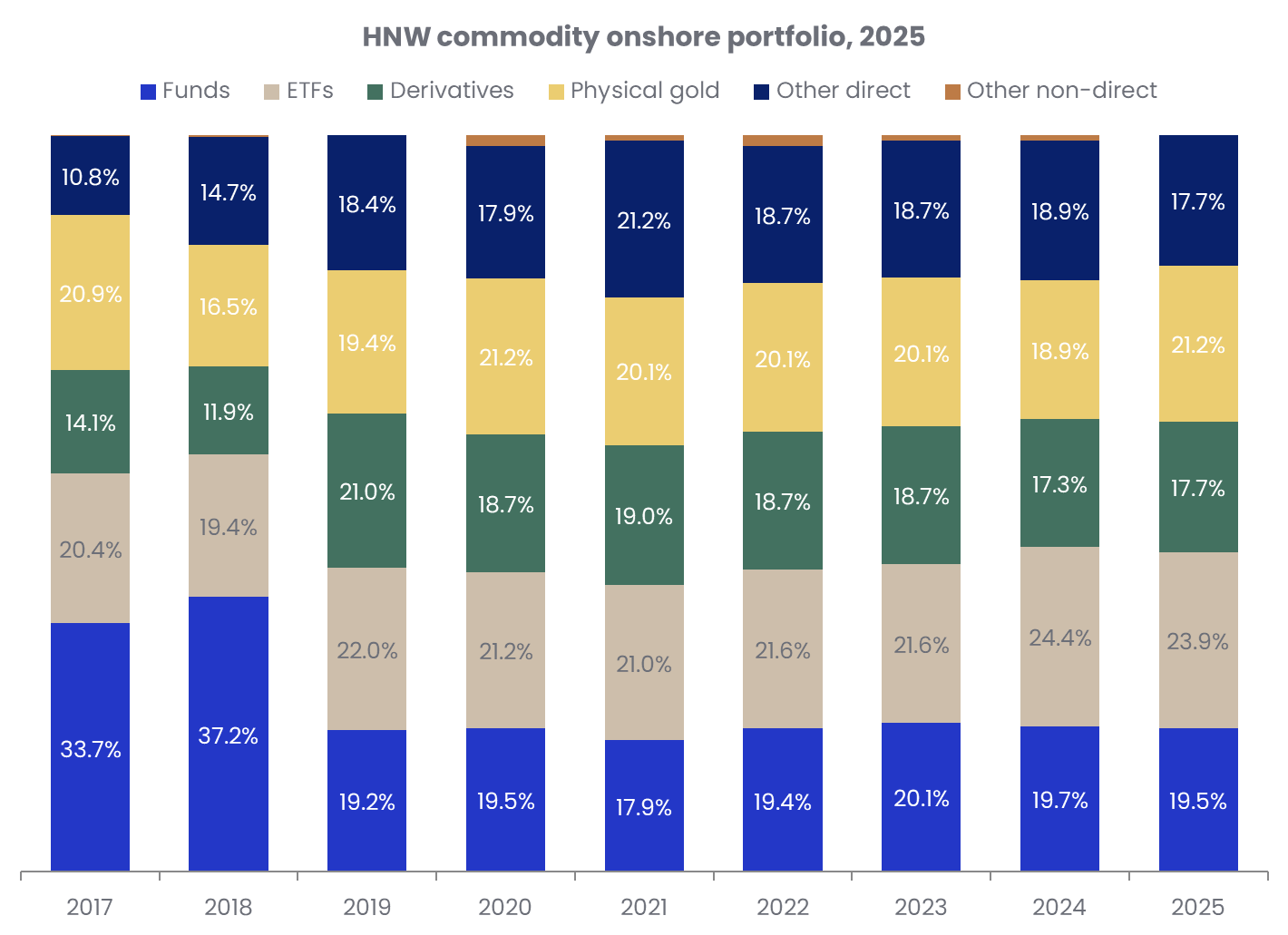
As per GlobalData’s HNW Asset Allocation Analytics, HNW allocations to commodities now stand at 11.1%, with more than one fifth of this held in physical gold and a significant share also invested through gold-backed ETFs. Interest in other commodities is also expected to rise, particularly in energy and industrial metals, driving up HNW investors’ overall commodity holdings.
Taken together, these developments highlight a broader challenge: traditional diversification is under pressure. When both equities and bonds are simultaneously influenced by inflation expectations and geopolitical risk, correlation risk needs to be reassessed and wealth managers need to expand the diversification toolkit.
Real assets such as infrastructure and property can provide stable income streams during times of heightened inflation. Private markets (including private equity and private credit) will also attract increased interest, with returns less directly correlated with public market volatility.
In an environment where risk management and diversification remain key drivers of investment decisions yet are becoming harder to achieve, portfolio construction must become more deliberate. Diversification is no longer simply about combining different asset classes. Instead, it requires diversification across economic scenarios, liquidity profiles, and political fallouts.
Heike van den Hoevel is Principal Analyst, Wealth Management, GlobalData